The short answer
Screening comes before a service menu.
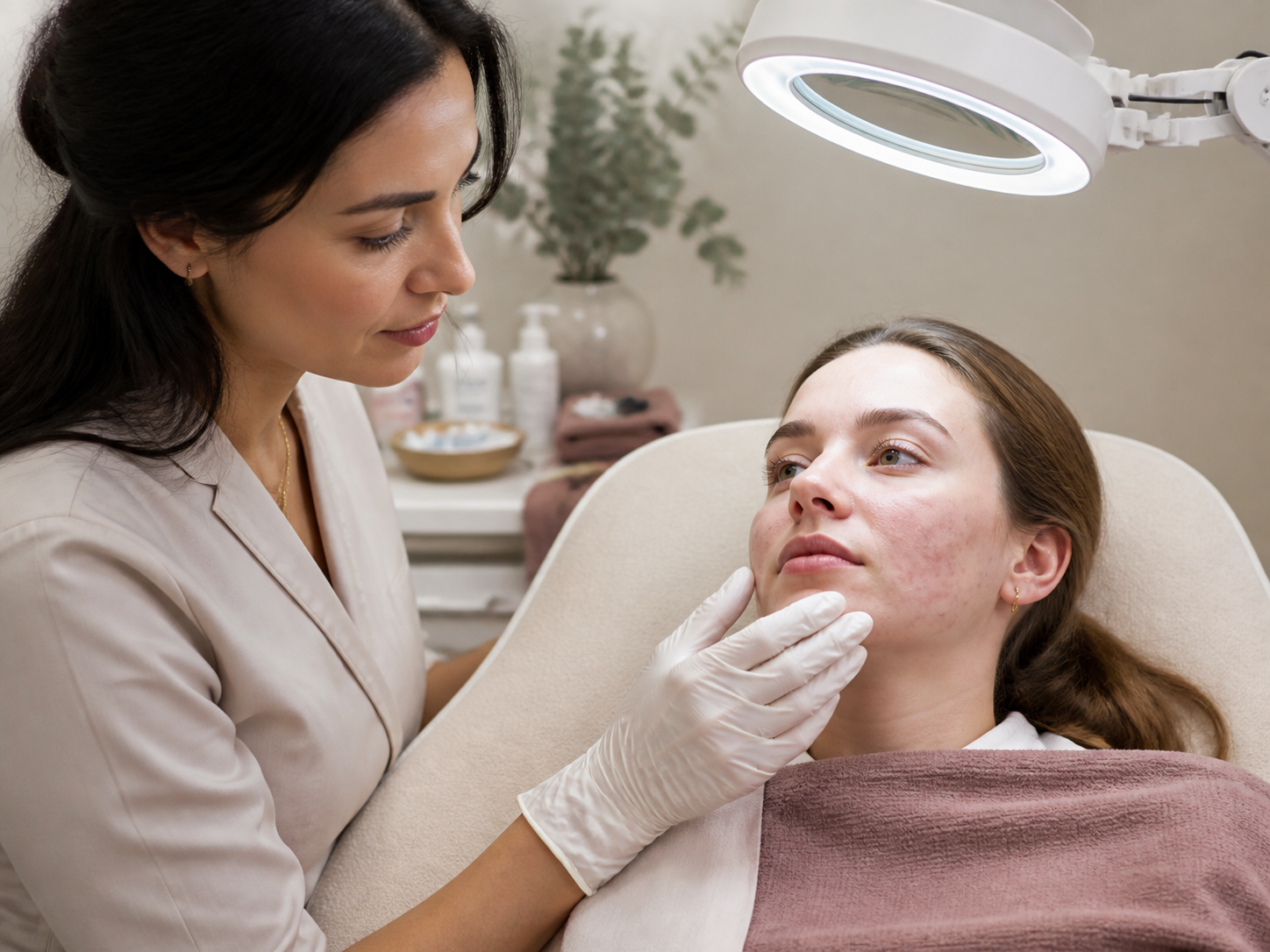
Active acne can look and behave differently from person to person. A responsible provider should ask about current symptoms, medicines, recent product changes, and any history of scarring or pigment change before suggesting a facial step. It is also appropriate for them to recommend medical evaluation instead.
What to disclose before a facial appointment
- Whether breakouts are painful, deep, spreading, bleeding, or leaving scars.
- Your current acne medicines, including prescription or over-the-counter products.
- Recent irritation, exfoliation, picking, or a reaction to products.
- Any dermatologist care you are receiving or have been told to start.
- Your goal for the visit: comfort, makeup planning, congestion questions, or a longer-term acne plan.
Ask what the provider would change or decline
Good screening is specific. Ask which parts of the proposed service would be skipped if your skin is inflamed, what the provider would avoid, and what signs would mean you should contact a medical professional. A “yes” to a facial should not come with a promise to clear acne or a reason to ignore a changing skin condition.
For the service category itself, see our acne treatment facial guide. To compare the roles of cosmetic care and medical care more directly, read acne facial or dermatologist: which conversation comes first?.
When a dermatologist should be part of the next step
The American Academy of Dermatology says many people with acne can benefit from seeing a dermatologist. In particular, painful deep breakouts, scarring, persistent acne, or dark spots after acne clears deserve a medical conversation. That does not make a facial consultation useless; it helps keep the scope honest.
Source